

Thermal Security Cameras
Florida Guide
A practical thermal camera buying guide for Florida projects covering benefits, installation planning, applications, and implementation FAQ.
Call us now
(954) 903-0007
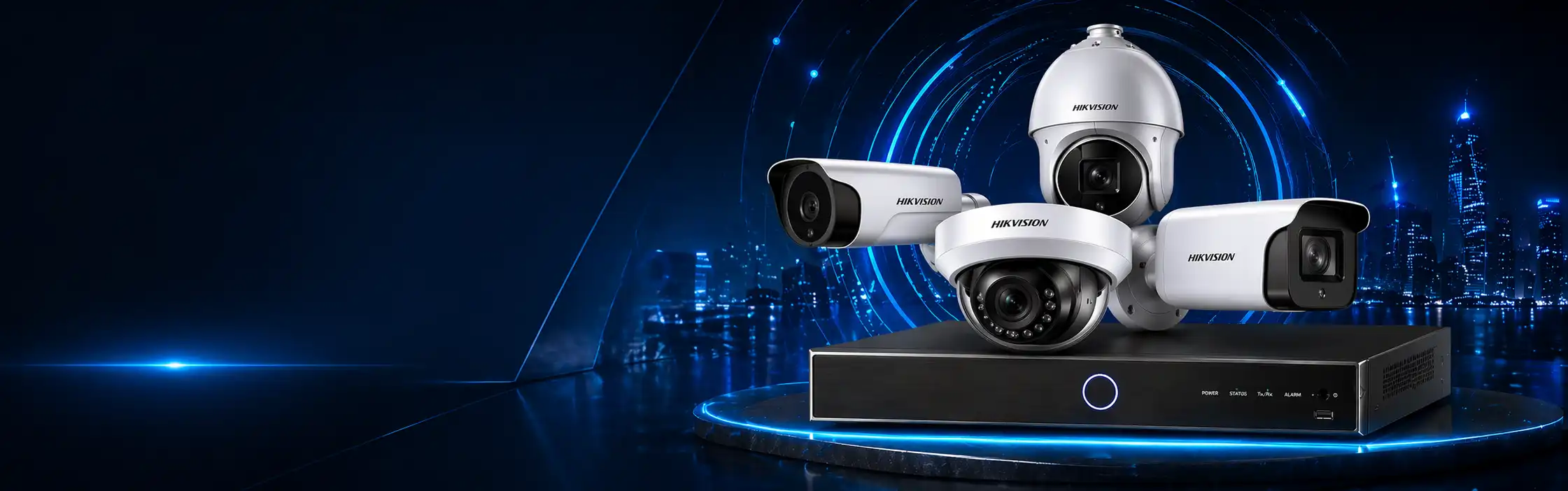
Why Thermal
Stronger Detection Where Visible Cameras Struggle
Thermal cameras detect heat signatures, enabling better perimeter awareness in darkness and low-visibility conditions.
Benefits
Thermal Camera Benefits
Core advantages of thermal imaging in security operations.
Reliable Detection in Low Visibility
Thermal cameras detect heat contrast rather than reflected light, making them ideal for night, low-light, and variable weather conditions. This is especially useful in Florida perimeter scenarios where lighting can be inconsistent and environmental glare is common.
Long-Range Perimeter Awareness
Many thermal models provide strong detection performance across large open areas. This allows security teams to monitor long fence lines, yards, and wide perimeters with fewer blind spots.
Early Intrusion Detection
Thermal analytics can identify movement and heat signatures before a subject reaches a high-risk zone. This gives operators more response time and improves incident outcomes.
Lower Dependence on Floodlighting
Because thermal sensors do not need visible light to detect targets, projects can reduce dependence on bright perimeter lighting in some zones.
Installation
Thermal Camera Installation Overview
A four-phase installation framework used by integrators for thermal deployments.
Phase 1
Site and Risk Assessment
- Define thermal objectives: early detection, intrusion verification, or long-range perimeter awareness.
- Map heat noise sources such as HVAC exhaust, machinery, and sun-heated surfaces.
- Set realistic detection and identification expectations per zone.
Phase 2
Positioning and Mounting
- Select mounting heights that preserve clear lines of sight over likely approach paths.
- Avoid extreme angles that reduce target pixel density at critical distances.
- Use stable mounting hardware to minimize vibration and preserve analytic performance.
Phase 3
Integration and Calibration
- Pair thermal channels with visible-light cameras where identification is required.
- Configure detection zones and rules to minimize nuisance alarms.
- Validate trigger behavior under day/night and high-heat conditions.
Phase 4
Operational Validation
- Run incident simulation tests at realistic distances and approach angles.
- Tune alert routing and escalation based on operator workflow.
- Document settings for future maintenance and expansion.
Applications
Thermal Camera Applications
Where thermal surveillance typically provides the strongest operational value.
Critical Perimeter Security
Thermal systems are widely used on high-value perimeters, logistics yards, and restricted access zones where early detection is a top priority.
Industrial and Utility Sites
Manufacturing and utility environments often benefit from thermal monitoring in low-light exterior areas and broad-site perimeter zones.
Large Campus Grounds
Thermal coverage supports universities, medical campuses, and corporate parks where long pathways and outdoor boundaries are difficult to monitor with visible-light cameras alone.
Remote and Low-Lighting Environments
Sites with poor lighting infrastructure or difficult terrain can use thermal detection to maintain dependable awareness without major lighting retrofits.
Authorized Dealer - Trusted Brands





Trusted by Florida contractors and operations teams
What Thermal Buyers Say
“Thermal cameras improved our perimeter alert quality immediately. We now detect movement earlier and with far fewer false alarms.”
Operations Director
Industrial Site, Florida
“The thermal buying guidance was practical and grounded in real deployment constraints. Very helpful for project planning.”
Security Integrator
Central Florida
“Pairing thermal with visible cameras gave us both early detection and visual confirmation, which made our team much more effective.”
Facilities Manager
South Florida
FAQ
Thermal Camera FAQ
What are thermal security cameras best used for?+
Thermal cameras are best for perimeter detection, low-light environments, and long-range awareness where traditional visible-light cameras struggle.
Can thermal cameras replace standard CCTV cameras?+
Usually no. Thermal cameras are often paired with standard cameras so teams get both early detection and visual identification.
Do thermal cameras work in fog or complete darkness?+
Yes. Thermal imaging detects heat signatures, so it remains effective in darkness and many low-visibility conditions.
What should be considered before installing thermal cameras?+
Teams should evaluate detection distance, mounting height, target size, environmental heat sources, and integration with existing VMS or NVR systems.
Explore More
Related Categories and Services

Need Help Specifying Thermal Cameras?
Get practical thermal camera guidance for your Florida project, including integration and deployment planning.
(954) 903-00072850 Stirling Road, Suite G, Hollywood, FL 33020