
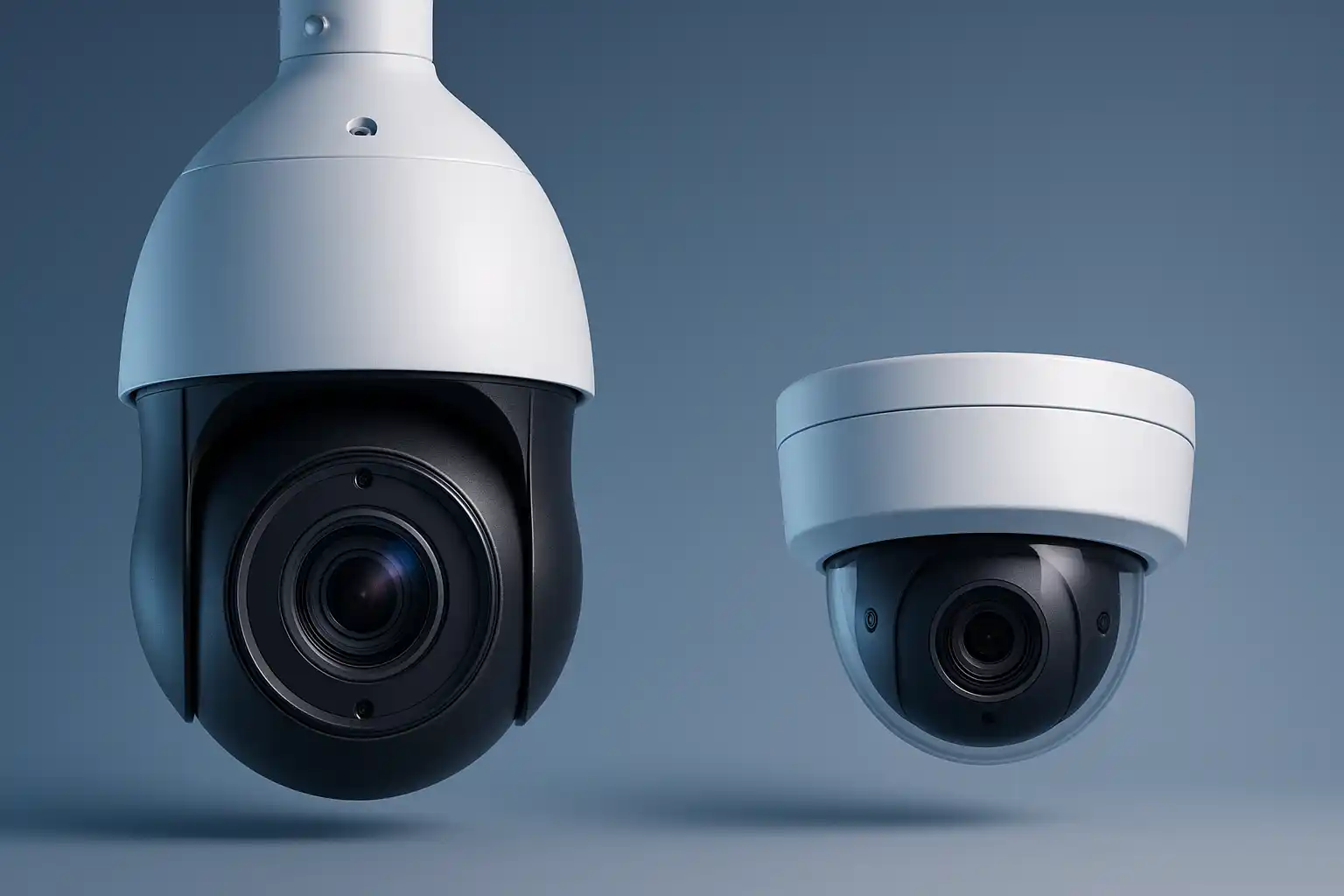
The Core Trade-off: Flexibility vs. Reliability
Pan-tilt-zoom (PTZ) cameras can rotate 360°, tilt up and down, and zoom in on details across a wide area. A single PTZ camera on a 6-meter pole can theoretically cover an entire parking lot. A fixed camera, by contrast, covers one specific angle — but it covers that angle 24/7, regardless of where the PTZ camera was last pointed when an incident occurs.
This is the fundamental trade-off: PTZ cameras offer flexibility and the ability to actively investigate events in real time. Fixed cameras offer passive, continuous coverage of a defined zone. For most Florida commercial installations, the answer is a combination of both — not one or the other.
When PTZ Cameras Excel
Large Open Areas with Active Monitoring
PTZ cameras are at their best when there's someone watching the feed in real time — a security guard at a monitoring station, or an automated AI tracking system. A PTZ can follow a person of interest across a large property, zoom in to capture license plate details, and sweep an entire perimeter on a scheduled patrol. This makes them ideal for:
- Large parking structures and surface lots
- Ports, warehouses, and distribution centers
- Construction sites during active security monitoring hours
- Outdoor event venues
- Large campuses and educational facilities with a monitored command center
AI Auto-Tracking
Modern PTZ cameras from (DS-2DE4A425IWG-E series) and Hanwha include on-camera AI tracking: the camera automatically detects a person or vehicle entering its field of view and follows them continuously — no operator needed. The camera returns to its home position after the target leaves the scene. This turns a PTZ into a practical perimeter tool even for unmonitored sites.
When Fixed Cameras Excel
Defined Critical Points
Entrances, cash registers, loading docks, server rooms, and stairwells all have a fixed "mandatory view" — one angle that must always be covered. A PTZ camera pointed elsewhere when someone breaks into a server room provides no value. Fixed cameras are the right choice anywhere coverage must be guaranteed at all times, regardless of what else is happening on the property.
Cost Efficiency for Multi-Camera Deployments
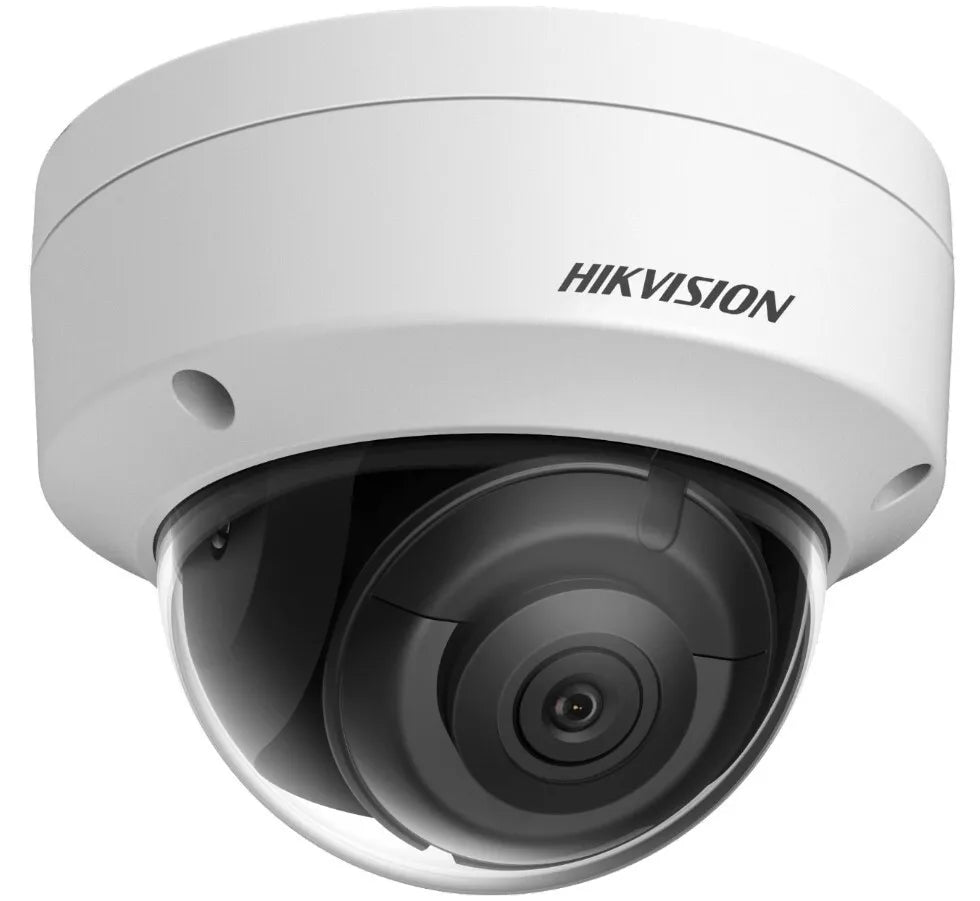
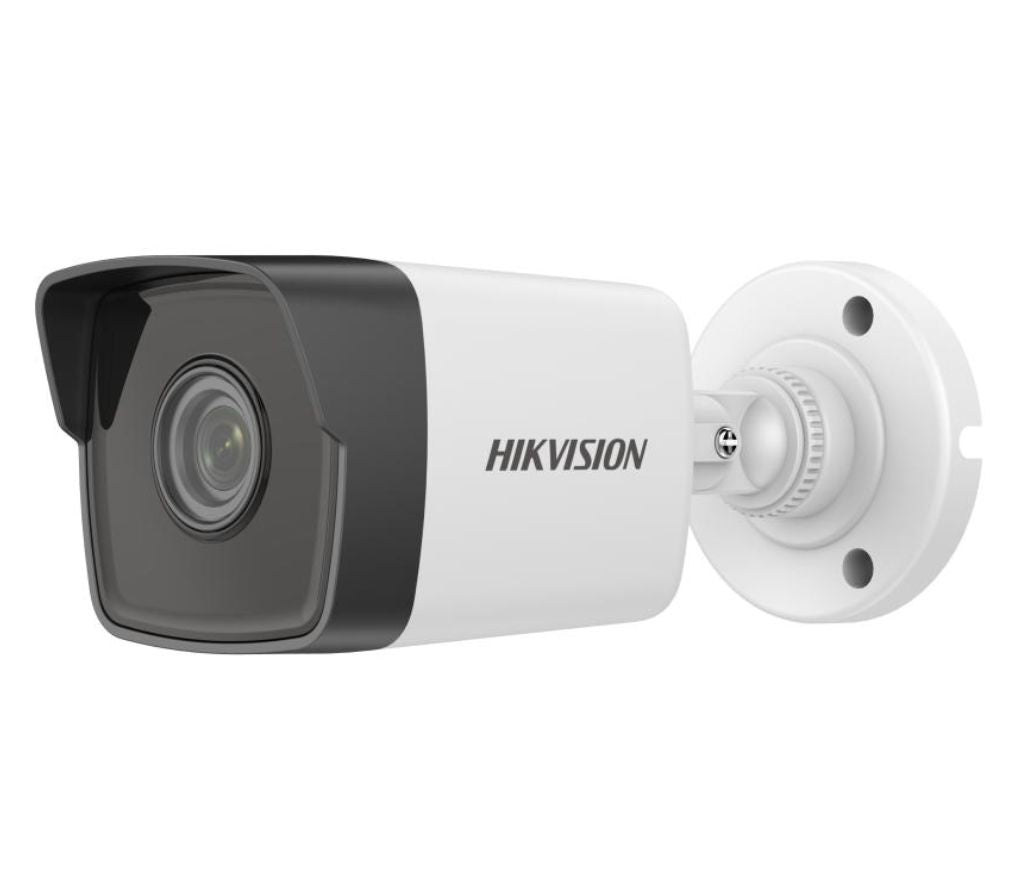
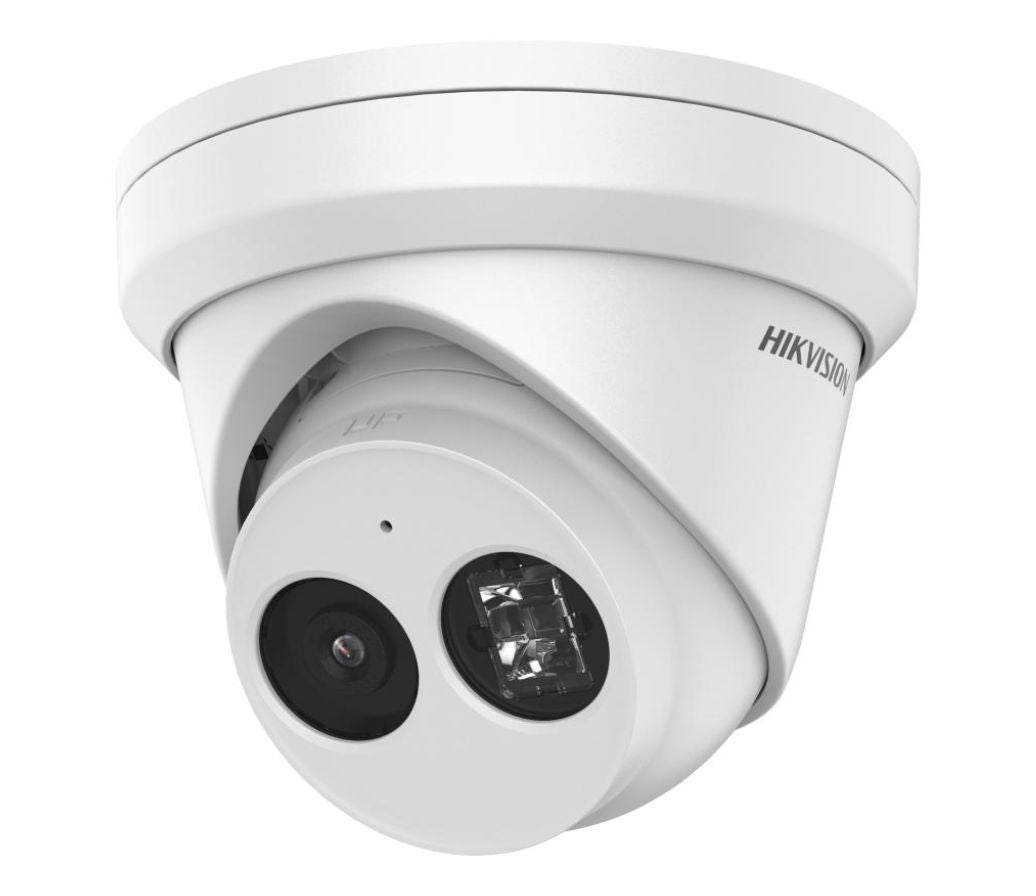
A quality fixed dome camera (4MP, AcuSense, H.265+) costs $80–$200 at wholesale. A quality PTZ camera starts at $400 and reaches $2,000+ for high-performance outdoor units. For a retail store needing coverage of 8 specific zones, 8 fixed cameras at $120 each ($960 total) will almost always outperform 2 PTZ cameras at $600 each ($1,200 total) — because the fixed cameras cover all 8 zones simultaneously, always.
Forensic Evidence Quality
Fixed cameras produce consistent, predictable footage of their coverage zone. When an incident occurs, you know exactly what each camera recorded. PTZ footage depends on where the camera was pointed at the time of the event — which creates uncertainty in a post-incident investigation.
Side-by-Side Comparison
| Factor | PTZ | Fixed |
|---|---|---|
| Coverage area per camera | Very large (with operator) | Defined zone only |
| Passive 24/7 coverage | Limited (one position at a time) | Excellent |
| Active investigation | Excellent | None |
| AI auto-tracking | Available (select models) | N/A |
| Cost per camera | $400–$2000+ | $80–$300 |
| Maintenance | Higher (mechanical parts) | Lower (no moving parts) |
| Best for | Open areas, active monitoring | Specific zones, entry points |
The Florida Hybrid Approach
The most effective security camera systems in Florida typically combine both: fixed cameras at all entry points, interior zones, and transaction areas — with one or two PTZ cameras covering large open outdoor areas. A typical Florida warehouse deployment might use:
- 12 × fixed 4MP AcuSense cameras: dock doors, interior aisles, office entry, parking gate
- 2 × PTZ cameras: large exterior parking areas with AI auto-tracking
This provides full passive coverage of all critical zones plus the flexible wide-area coverage of PTZ for the open spaces where fixed cameras would require 4–6 units to match the same coverage.
Recommended Models for Florida
Fixed cameras:
- DS-2CD2347G2-LU — 4MP ColorVu AcuSense. Outdoor, parking, entrances.
- DS-2CD2143G2-IU — 4MP dome, AcuSense, built-in mic. Interior zones.
- Hanwha QNV-8080R — 5MP outdoor dome. Excellent WDR for Florida's high-contrast lighting.
PTZ cameras:
- DS-2DE4A425IWG-E — 4MP, 25× optical zoom, AcuSense auto-tracking. Best value outdoor PTZ.
- DS-2DE4A430IWG-E — 4MP, 30× zoom. Larger commercial properties.
- Hanwha XNP-9300RW — 4K PTZ, 30× zoom. Premium large-site deployments.
IDS CCTV stocks both fixed and PTZ cameras at wholesale pricing with free UPS shipping across Florida. Call (954) 903-0007 or get a quote online.