
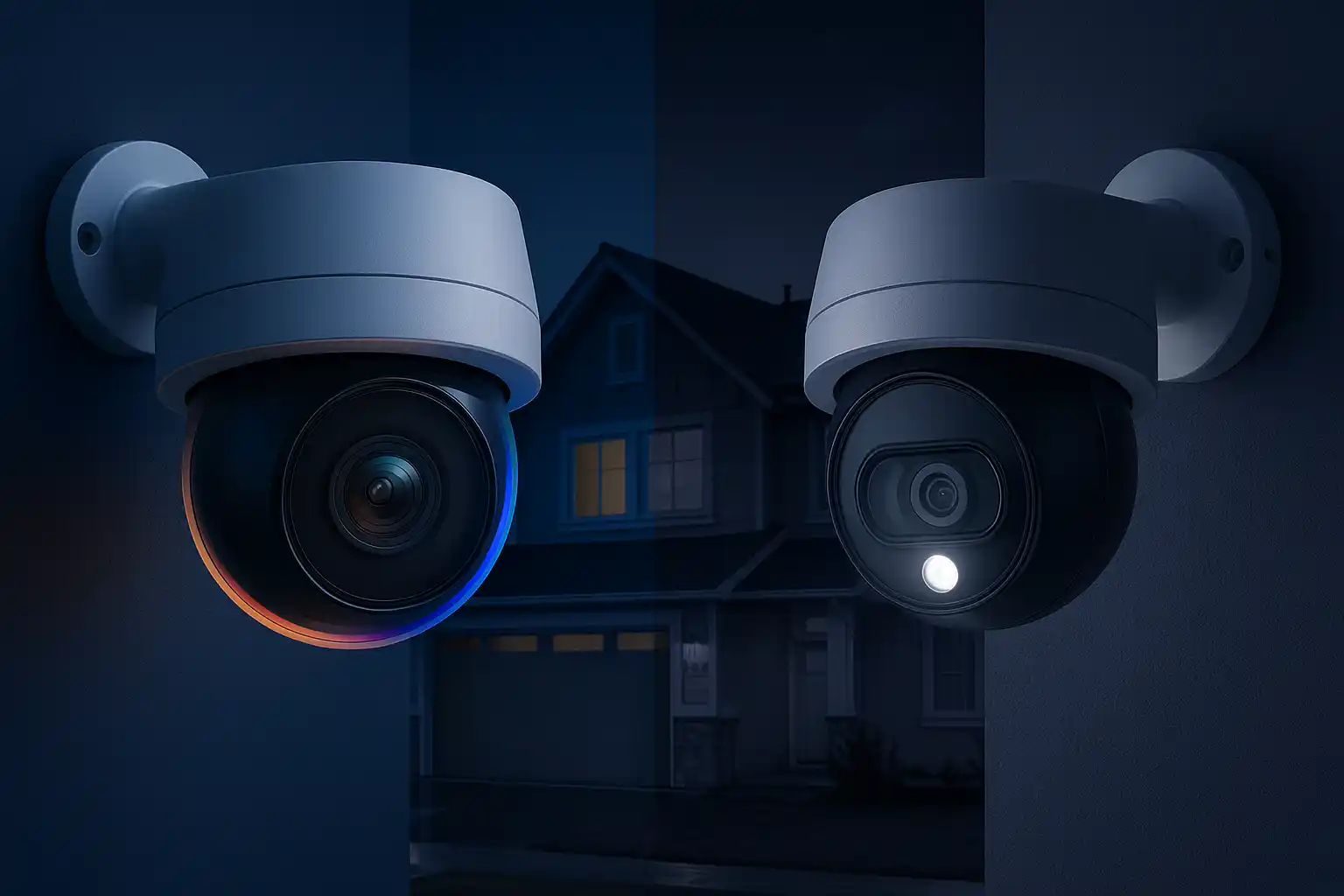
What Is ColorVu Technology?
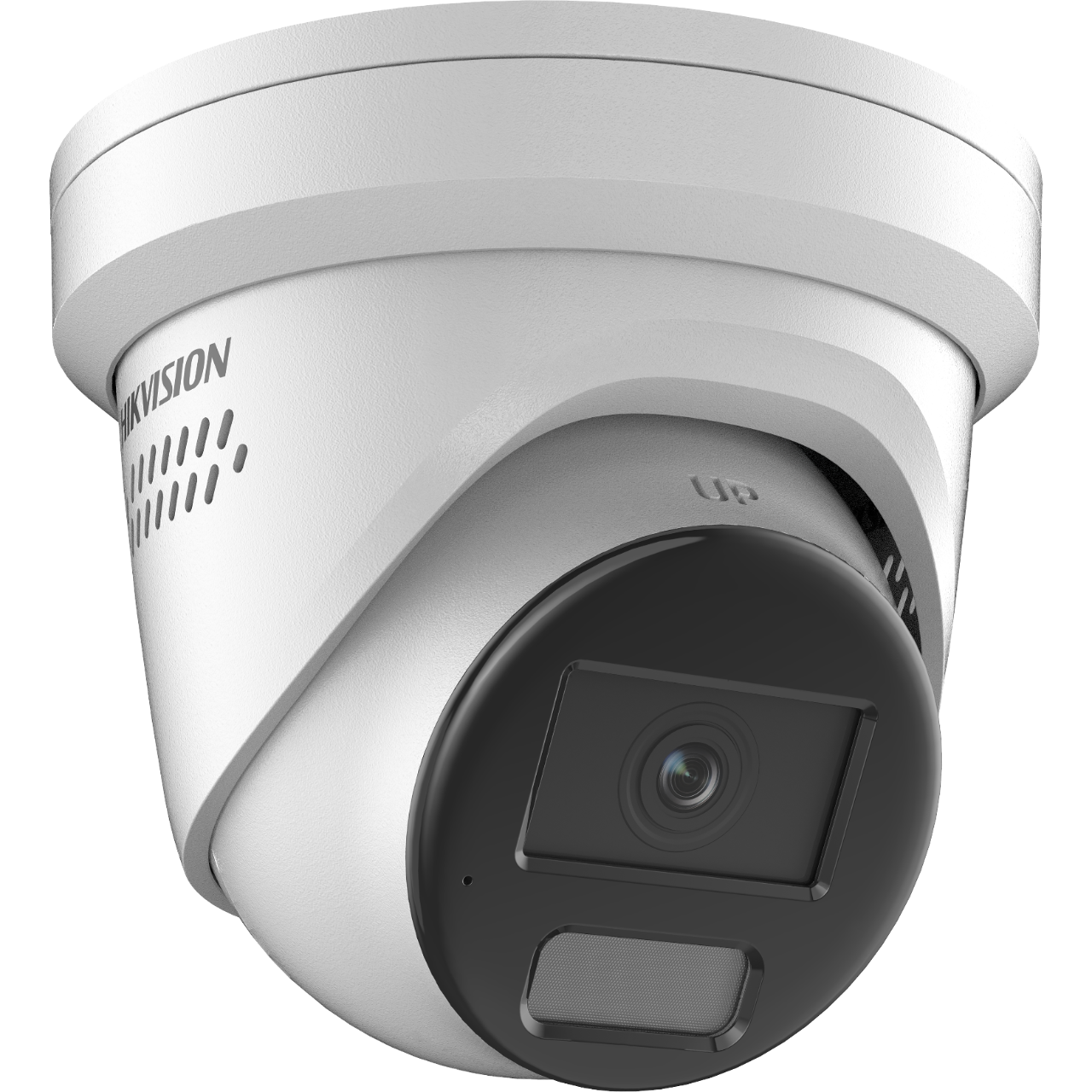
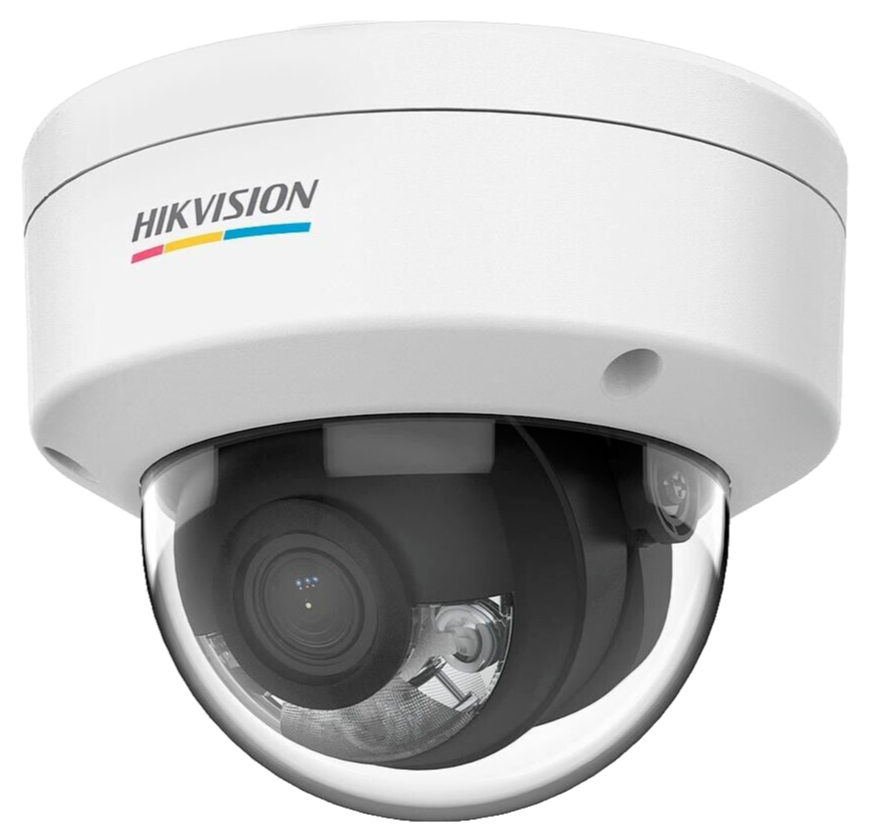
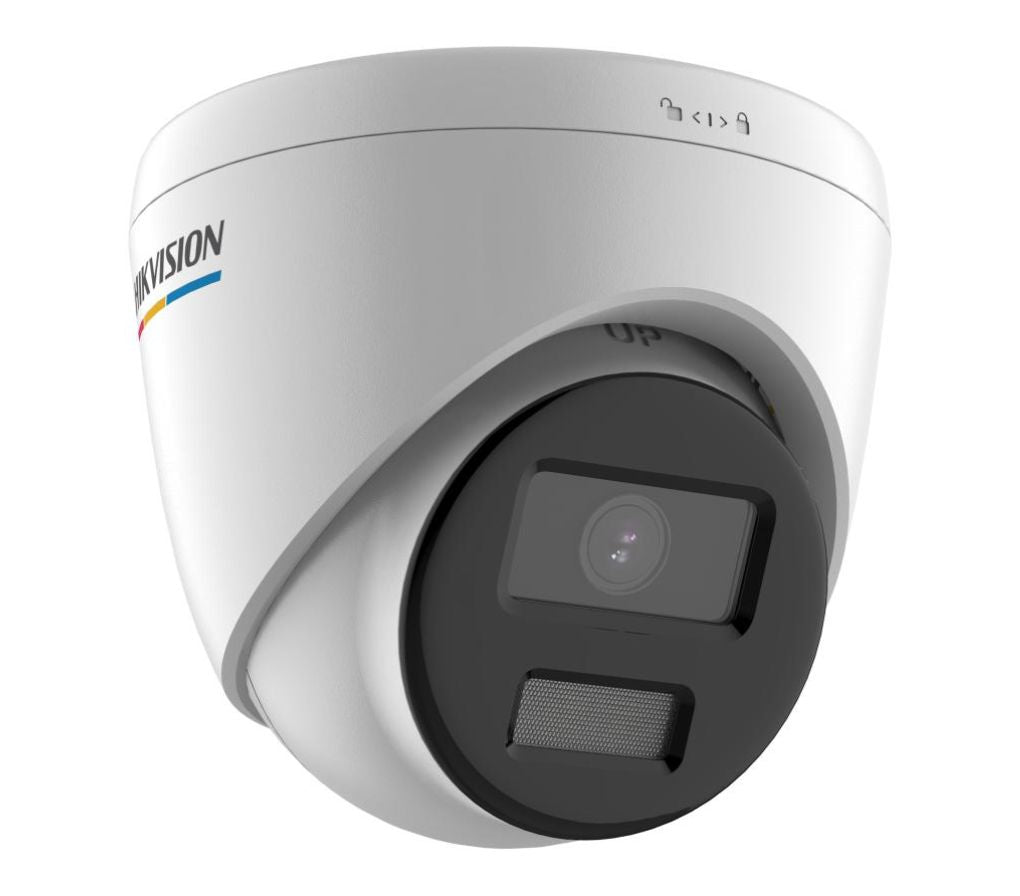
ColorVu is 's full-color night vision technology. Instead of switching to black-and-white IR mode at dusk, ColorVu cameras use two components to maintain color around the clock:
- F1.0 large-aperture lens — admits significantly more light than the F2.0 lenses on standard cameras, boosting low-light sensitivity without any added illuminator.
- Supplemental white-light LED — activates in low-light conditions to illuminate the scene, producing full-color footage with no IR glow.
The practical result: people are identifiable by clothing color, vehicle colors are captured accurately, and overall situational awareness in incident review is dramatically higher than IR monochrome footage.
What Is Traditional IR Night Vision?
Standard infrared cameras switch to monochrome (black-and-white) mode in low light, activating invisible near-infrared LEDs to illuminate the scene. The image sensor is sensitive to IR wavelengths, enabling visibility in complete darkness with no visible light emission.
IR cameras remain the most common type in CCTV installations because they:
- Operate in complete darkness with zero visible light output
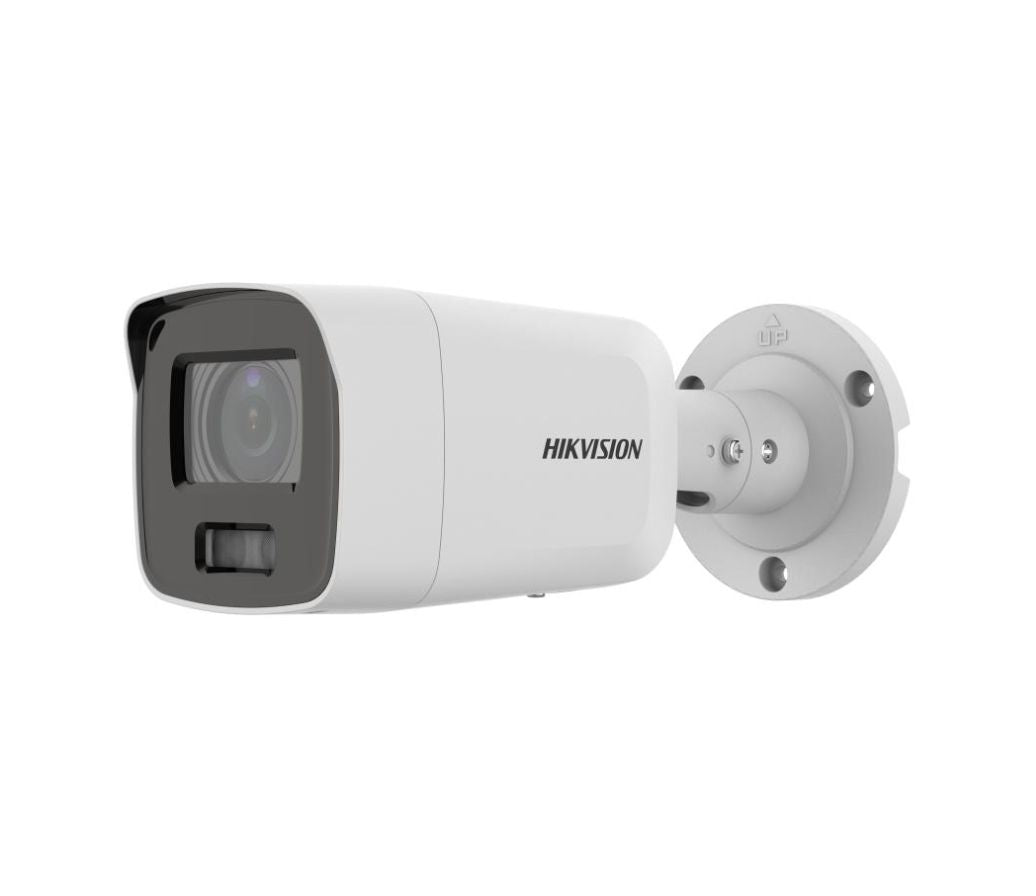
- Achieve longer illumination ranges — up to 100m+ on dedicated long-range bullet models
- Cost less than full-color equivalents at the same resolution
- Produce no light pollution, making them appropriate for residential borders and sensitive locations
ColorVu vs IR: Head-to-Head Comparison
| Feature | ColorVu (Full-Color) | Standard IR |
|---|---|---|
| Night footage color | Full color | Black & white |
| Clothing/vehicle identification | Excellent | Limited |
| Visible light at night | Warm white glow (visible) | No visible light (850nm) |
| Illumination range | Up to 60m typical | Up to 100m+ (long-range models) |
| Cost premium vs IR | $30–$80 more per camera | Baseline |
| Best application | Entrances, parking, retail, lobbies | Perimeter, dark corridors, long-range |
| Works in complete darkness | Yes (active white-light LED) | Yes (active IR LED) |
Where ColorVu Wins: The Florida Case
In Florida, color night vision matters more than in most other regions. Several factors amplify the value of full-color footage:
- Year-round outdoor activity after dark — Florida's warm climate means parking lots, pool decks, and building entrances are active well into the evening every night of the year. Color footage makes incident review substantially more useful than IR monochrome.
- Hotel, resort, and hospitality surveillance — Identifying guests and vehicles by color detail is often required for incident documentation, liability protection, and insurance claims. Black-and-white footage limits what can be determined about clothing, vehicle color, or distinguishing features.
- Retail and commercial strip coverage — South Florida retail corridors benefit directly from ColorVu for theft investigation. Loss prevention teams consistently report better outcomes with color footage in shoplifting and grab-and-run incidents.
- Parking garage lighting challenges — Mixed and inconsistent lighting in parking structures makes ColorVu's active supplemental white light a significant advantage over passive IR, which can leave areas between light fixtures in deep shadow.
Where IR Still Makes Sense
ColorVu is not the right choice for every camera position. IR cameras remain correct for several common applications:
- Long-range perimeter monitoring — Fence lines, access roads, and open fields at distances over 60 meters require IR illumination. A DS-2CD2T47G2-L IR at 80m outreaches typical ColorVu models at similar price points.
- Residential installs near property lines — A camera that emits visible white light at night may cause neighbor complaints or HOA issues. IR is the correct choice where the camera faces toward a neighboring property or residential area.
- Detection-only zones — Corridors, stairwells, and back-of-house passages where the camera exists to trigger alarms rather than identify individuals don't justify the ColorVu premium. IR delivers the same motion detection performance at lower cost.
- Budget-constrained multi-camera projects — On a 16-camera warehouse system, the $50/camera difference between IR and ColorVu adds $800 to the project. Allocate ColorVu to customer-facing and parking areas; use IR in low-priority internal zones.
Dual-Light Cameras: Best of Both Technologies
's newer camera lines include Dual Light technology — combining both IR and white-light LEDs in a single housing. The camera defaults to full-color mode using the white-light LED. If ambient light drops too far or white-light supplementation isn't sufficient, the IR fallback activates automatically.
For new Florida installations where budget allows, Dual Light models (DS-2CD2T47G2-LU, DS-2CD2347G2-LU series) are typically the best long-term investment — you get ColorVu's color identification advantages with IR range as a fail-safe, and a single camera SKU covers most positioning requirements.
Recommended Camera Selection by Use Case
- Building entrance / lobby: DS-2CD1347G2-LUF 4MP ColorVu MD 2.0 with audio — AI human/vehicle classification, full color, built-in mic
- Parking lot / exterior coverage: DS-2CD2T47G2-LU 4MP ColorVu Dual Light — 60m white-light range, audio input, H.265+
- Wide outdoor panoramic: DS-2CD2387G2P-LSU/SL 8MP 180° ColorVu — dual-lens panoramic with strobe deterrence for large lots
- Long-range perimeter: DS-2CD2T47G2-L 4MP IR bullet — 80m IR range, AcuSense AI detection, IP67
- Budget indoor detection: DS-2CD2143G2-I 4MP AcuSense IR turret — 40m IR, human/vehicle AI, excellent value for internal zones
Frequently Asked Questions
- Will the white light from a ColorVu camera bother neighbors at night?
ColorVu cameras emit a soft warm white glow when the supplemental LED activates — visible but not harsh. For cameras near residential property lines or facing occupied spaces, choose IR cameras or position ColorVu cameras to face away from the neighboring property.
- Do ColorVu cameras work in complete darkness with no existing lighting?
Yes. The built-in white-light LED provides its own illumination, activating automatically when ambient light drops below threshold. ColorVu cameras don't require any existing light source to produce full-color footage.
- Can ColorVu and IR cameras share the same NVR?
Yes. ColorVu and IR cameras connect identically via PoE or network and record to any NVR. You can mix camera types freely within a single system with no configuration limitations.
- Does color night vision affect storage requirements?
Color footage at night is similar in file size to daytime color footage at the same resolution and bitrate. Compared to IR black-and-white footage, color video may run 5–10% larger. Factor this into your NVR storage and retention calculation when mixing IR and ColorVu cameras.
- Is ColorVu worth the extra cost for a home security system?
For driveways, front doors, and side gates — yes. The ability to identify clothing, vehicle colors, and distinguishing features in home security incidents is meaningful. For back fence lines or dark side passages, standard IR cameras are cost-effective and deliver the same detection performance.