

How Thermal Cameras Work
Thermal (infrared) cameras don't capture visible light — they detect thermal radiation (heat) emitted by all objects. A human body at 98.6°F radiates distinctly more heat than a concrete wall at 75°F, allowing thermal cameras to detect human presence in conditions that render conventional cameras completely blind: total darkness, heavy fog, smoke, dense vegetation, and even some forms of camouflage.
Thermal cameras produce a grayscale image where bright areas represent heat sources and dark areas are cooler surfaces. Modern thermal cameras add artificial color palettes (white-hot, black-hot, rainbow) to make images easier to interpret. Unlike IR illuminators, thermal cameras generate no visible or near-IR light — they are truly passive detectors.
Key Thermal Camera Specifications
Resolution
Thermal sensors have much lower resolution than optical cameras. Common resolutions range from 160×120 pixels (budget) to 640×512 pixels (professional). Even professional thermal cameras can't match the identification detail of a 4MP optical camera — they excel at detection and classification, not forensic identification of individuals.
Detection Range
Detection range is how far a camera can detect a human presence. A quality 640×480 thermal camera can detect a human at 500–1,000 meters in ideal conditions. This makes thermal cameras ideal for large perimeter applications where conventional IR cameras would require dozens of units to achieve equivalent coverage.
Sensitivity (NETD)
Noise Equivalent Temperature Difference (NETD) measures how small a temperature difference the sensor can detect. Lower NETD = better sensitivity. Professional cameras achieve <40mK; budget cameras may be 100mK+. Lower NETD cameras detect subtle temperature differences, improving performance in challenging conditions.
Best Use Cases for Thermal Cameras
- Large perimeter surveillance: Airports, utility substations, data centers, military facilities — anywhere a large boundary needs monitoring with fewer cameras
- Complete darkness applications: Outdoor perimeters where IR illumination would be inadequate or impractical
- Fog-prone environments: Coastal Florida properties near water where evening fog frequently reduces optical camera effectiveness
- Wildlife-triggered false alarm reduction: Thermal cameras distinguish human heat signatures from animal heat signatures more reliably than standard cameras
- Critical infrastructure protection: Oil terminals, fuel storage, electrical substations where undetected intrusion has severe consequences
- Temperature screening: Medical and industrial applications detecting elevated body temperatures or overheating equipment
When NOT to Use Thermal Cameras
- For identification or recognition — thermal images lack the detail needed for facial recognition
- As a replacement for optical cameras — thermal cameras should complement, not replace, visible-light cameras
- In small enclosed spaces where conventional cameras work well
- For license plate capture — thermal cameras cannot read plates effectively
- Budget-sensitive residential installations — thermal cameras cost 5–20× more than equivalent optical cameras
Thermal + Optical: The Best Approach
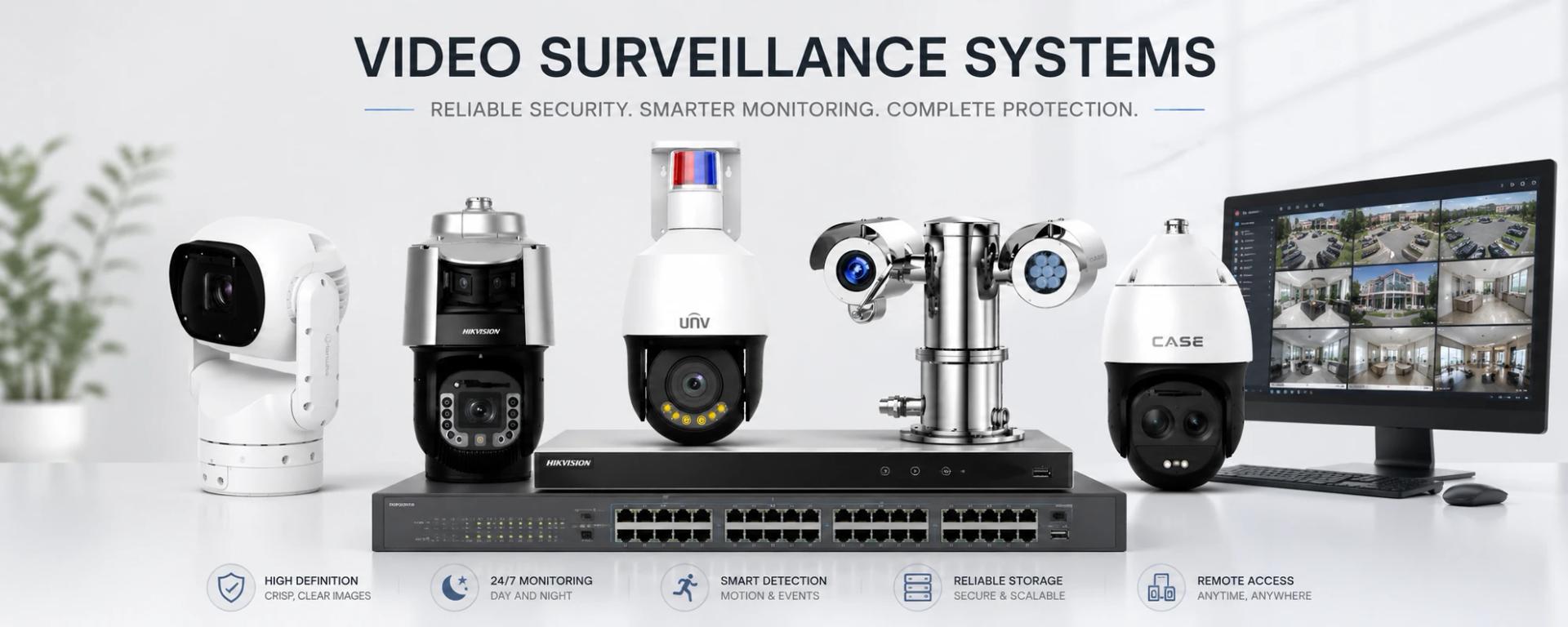
Best practice for perimeter security combines thermal and optical cameras: thermal cameras provide wide-area detection and alert generation, optical PTZ cameras auto-slew to the detection point for visual confirmation and recording. This combination delivers both the detection range of thermal and the identification detail of high-resolution optical cameras.
Regulations and Considerations
In Florida, thermal cameras used in commercial settings follow the same privacy laws as conventional cameras. However, high-range thermal cameras capable of detecting heat signatures through walls or windows may raise different legal considerations — consult with legal counsel for applications beyond standard perimeter monitoring.


