
The Core Question: Flexibility vs. Guaranteed Coverage
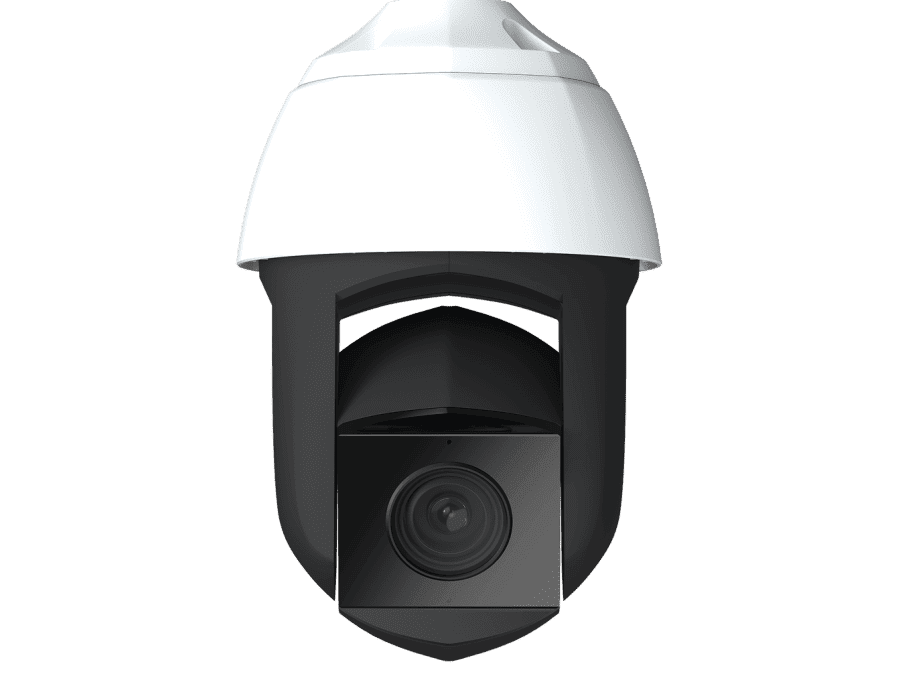
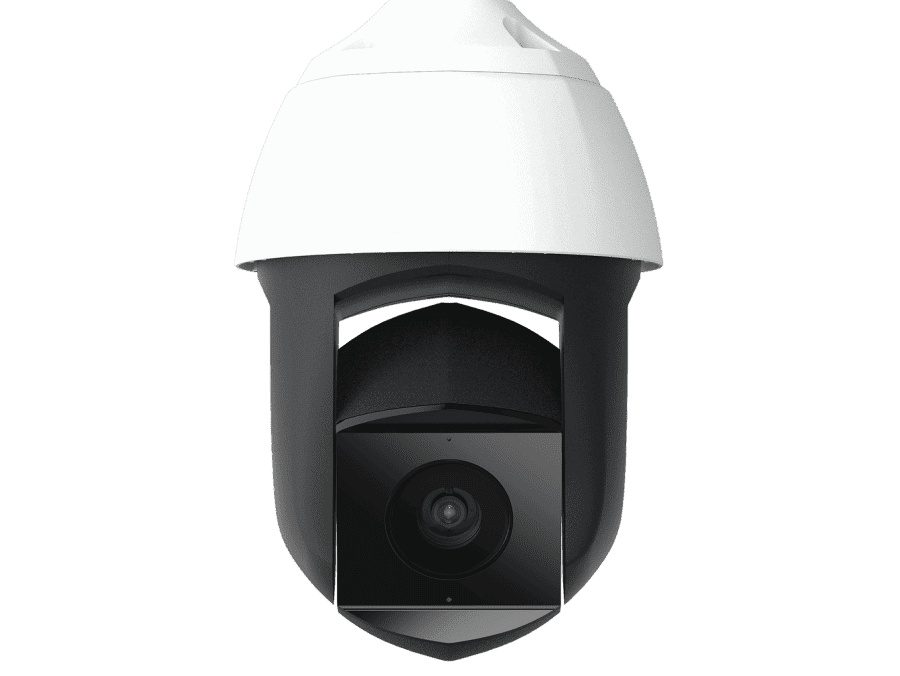
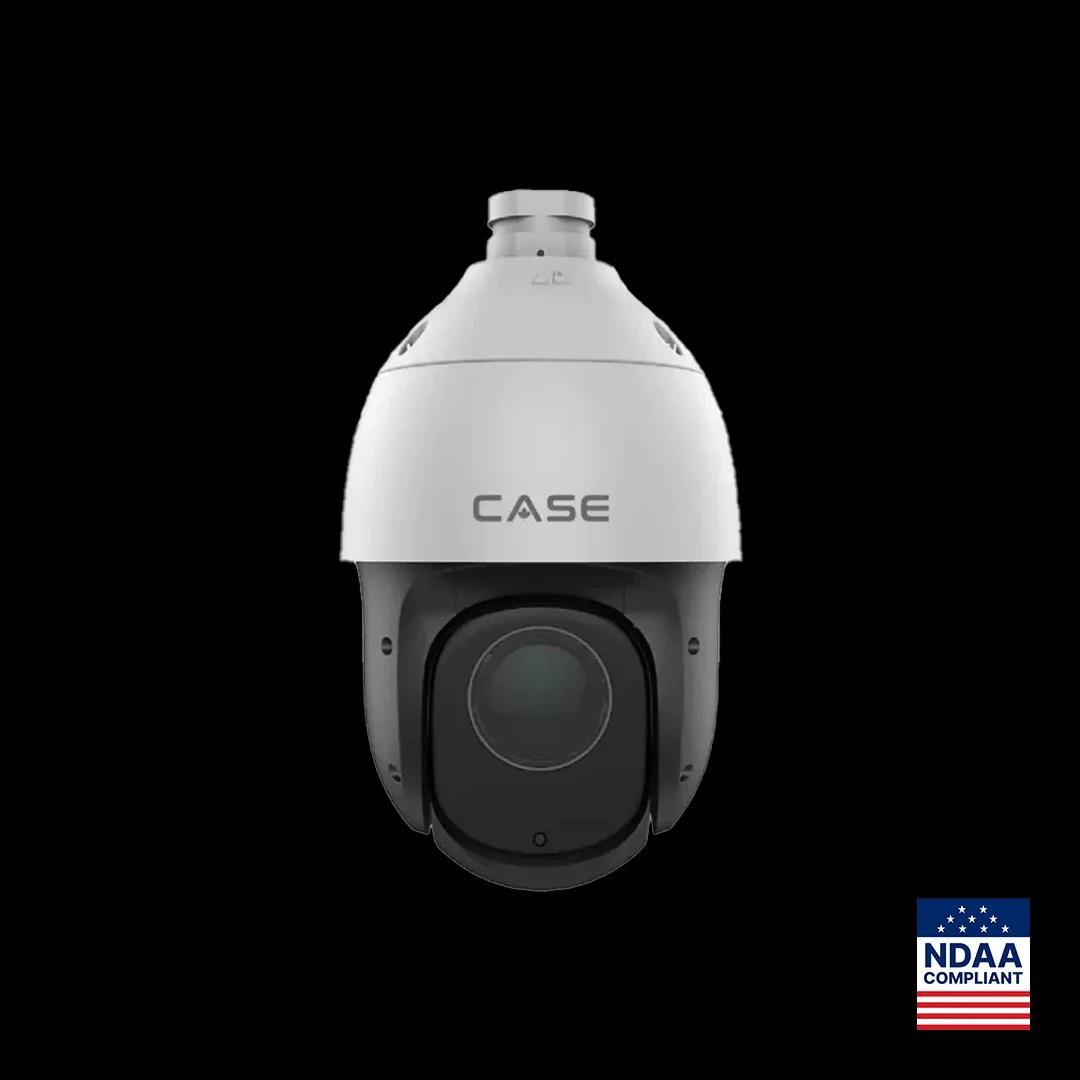
Pan-tilt-zoom cameras and fixed cameras serve fundamentally different surveillance purposes. A PTZ camera is a tool for active investigation — it follows movement, zooms into detail, and sweeps a large area. A fixed camera is a passive witness — it records one specific zone continuously, regardless of what else is happening nearby.
Understanding this distinction helps you deploy both types strategically rather than trying to use one to replace the other.
PTZ Cameras: Strengths and Weaknesses
Strengths
- Wide-area coverage from a single mounting point — one PTZ can cover what would require 3–6 fixed cameras
- Active investigation: pan to any angle, zoom to identify a license plate or face across a large area
- AI auto-tracking: modern and Hanwha PTZ cameras automatically follow a detected person or vehicle without operator intervention
- Scheduled patrols: PTZ cameras can be programmed to sweep between multiple preset positions on a schedule
- Deterrence: the visible movement of a PTZ camera tells would-be intruders they are actively being watched
Weaknesses
- Can only be in one position at a time — if pointed elsewhere when an incident occurs, that incident isn't captured
- Mechanical components (motors, gears) mean higher maintenance requirements and shorter service life than fixed cameras
- Higher cost: $400–$2,000+ vs $80–$300 for an equivalent fixed camera
- Less reliable as a passive forensic recording tool
Fixed Cameras: Strengths and Weaknesses
Strengths
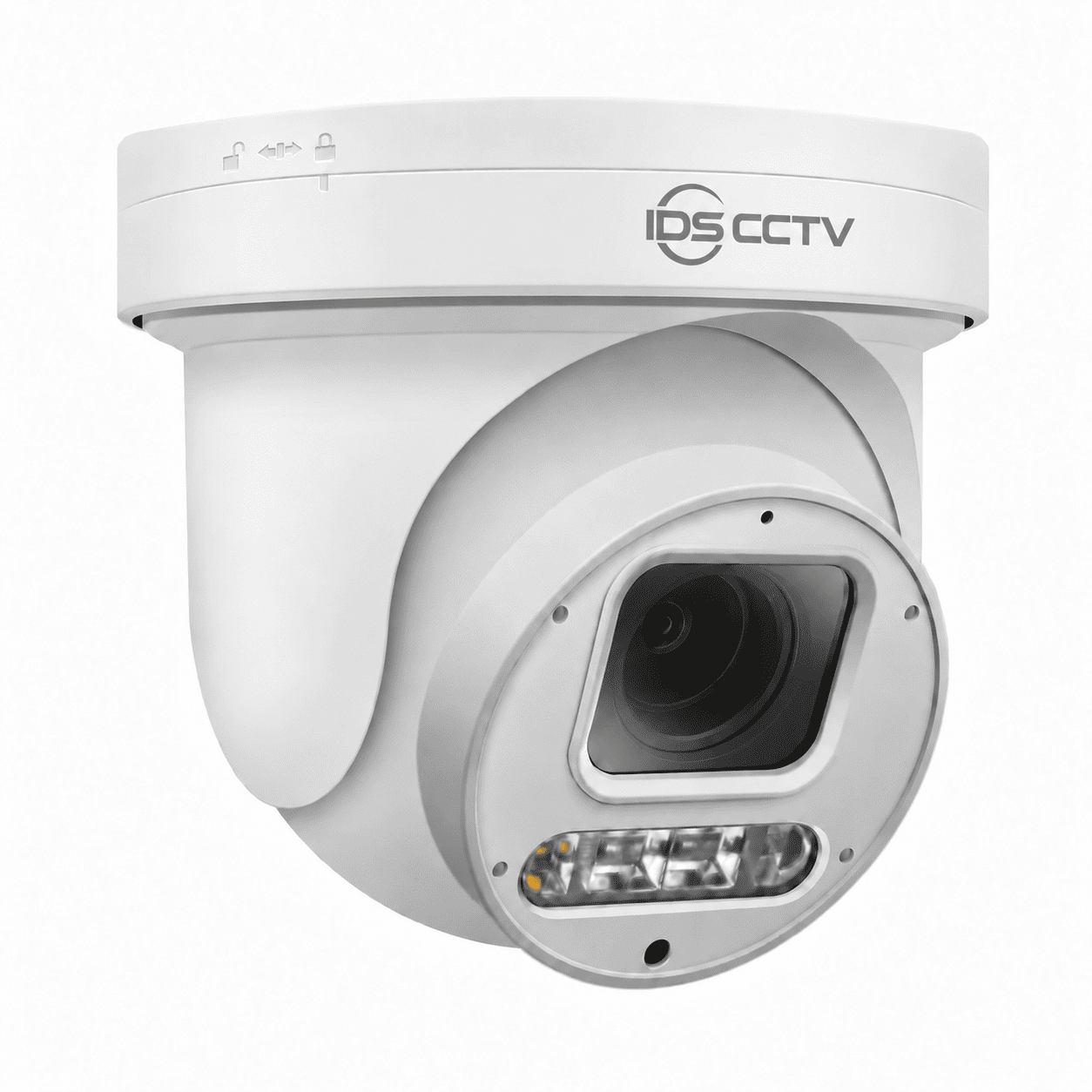
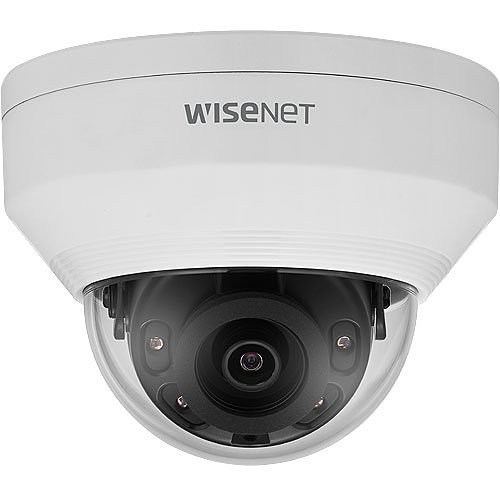
- Guaranteed coverage of their specific zone, 24/7 — no matter what else is happening
- No moving parts means lower maintenance and longer service life (7–12 years vs 5–8 for PTZ)
- Lower cost per zone covered — better value for properties with many specific coverage requirements
- Predictable forensic value: you always know what each camera recorded
Weaknesses
- Each camera covers only its fixed field of view
- More cameras required to cover large open areas
- No ability to investigate or follow movement in real time
The Florida Hybrid Formula
Most effective Florida security deployments combine fixed cameras at all specific critical coverage zones with PTZ cameras for large open areas:
- Fixed cameras at: every entry/exit door, cash registers, stairwells, corridors, server rooms, and any area where you need guaranteed 24/7 footage
- PTZ cameras at: large parking areas, open outdoor spaces, construction site perimeters, and any area where an operator or AI system will actively monitor the feed
Example deployment for a Florida 10,000 sq ft retail store with large parking lot:
- 8 × fixed cameras: front entrance (2), rear entrance (1), POS area (2), stockroom (1), side exits (2)
- 2 × PTZ cameras: parking lot with AI auto-tracking
- Total: 10 cameras covering the complete property
Cost Comparison for a Florida Parking Lot
A 200-space parking lot (approximately 2 acres) might require:
- Fixed camera approach: 8–12 fixed 4MP cameras on poles to cover the full area — $120 × 10 = $1,200 for cameras plus pole installation costs
- PTZ approach: 2–3 PTZ cameras on taller poles with broader coverage — $600 × 2 = $1,200 for cameras plus installation, but far fewer cable runs and conduit installations
In this case the PTZ approach delivers comparable coverage at similar camera cost but lower total installation cost due to fewer cable runs.
Top Models for Florida
PTZ: DS-2DE4A425IWG-E (4MP, 25× zoom, AcuSense auto-tracking, $380–$450 wholesale) is the most popular outdoor PTZ choice for Florida commercial sites at IDS CCTV.
Fixed outdoor: DS-2CD2347G2-LU (4MP ColorVu AcuSense, $120–$160 wholesale) is our most-specified fixed camera for Florida outdoor applications — full-color night vision handles Florida's mixed lighting environments.
IDS CCTV can design the right mix of PTZ and fixed cameras for your specific Florida property. Call (954) 903-0007 for a free system design consultation.