

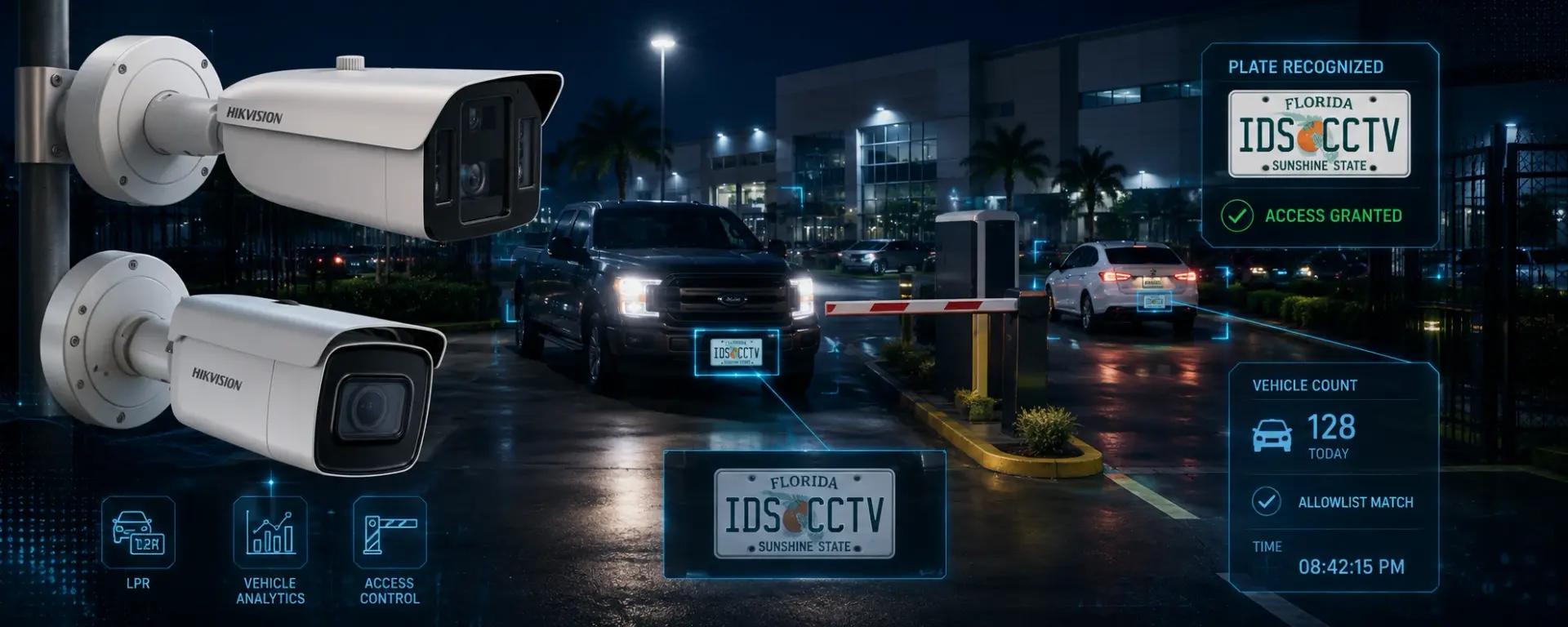
What Is LPR/ALPR?
License Plate Recognition (LPR), also called Automatic License Plate Recognition (ALPR), is the process of capturing vehicle license plates with a camera system and using software to extract the plate number as text. This enables automated vehicle logging, access control, stolen vehicle alerts, and vehicle-linked incident investigation.
A true LPR camera system differs from simply recording video and reading plates manually. LPR systems automatically process video in real time, log plate numbers with timestamps, and can trigger alerts when specific plates are detected.
Why Standard Cameras Fail at LPR
Most security cameras are not suitable for reliable plate capture. The challenges are significant:
- Motion blur: A vehicle moving at 5 mph travels several inches during a typical camera's exposure time, blurring the plate. LPR cameras use extremely fast shutter speeds (1/500s–1/2000s) and often infrared illumination to freeze plate movement.
- Narrow depth of field: Plates pass through the camera's capture zone in less than a second. The camera must be precisely positioned so the plate is in focus throughout the capture zone.
- Lighting variation: LPR cameras use dedicated IR illuminators (separate from the camera's regular night vision) to provide consistent, flat illumination on plate surfaces regardless of ambient lighting.
- Angle sensitivity: Plates must be captured at no more than 30° horizontal angle from the camera's optical axis. Cameras aimed perpendicular to vehicle travel (from the side) cannot read plates reliably.
LPR Camera Installation Requirements
Camera Positioning
- Mount camera parallel to vehicle travel direction (not perpendicular)
- Capture zone: 15–30 feet from camera for best focus and illumination
- Camera height: 2.5–4 feet above ground level, aimed at plate height
- Horizontal angle: No more than 30° from the lens axis to the plate
- One camera per lane of traffic
Technical Specifications for Dedicated LPR Cameras
- Resolution: Minimum 2MP; dedicated LPR cameras optimized for plate region
- Shutter speed: 1/500s minimum; 1/1000s for speeds above 15 mph
- Dedicated IR illuminator: Separate wavelength (850nm–940nm) for plate illumination
- Wide Dynamic Range: For day/night transitions at entry points
Software: Where LPR Happens
Camera hardware captures the image — software performs the recognition. LPR software can run on:
- The camera itself: Some cameras include onboard OCR (optical character recognition) for plate text extraction
- An NVR/VMS: Certain enterprise NVRs and VMS platforms include LPR analytics that process streams from designated LPR cameras
- Dedicated LPR servers: High-volume applications (parking garages, large campuses) use dedicated LPR processing servers handling hundreds of lanes
Use Cases for LPR in Florida
- Gated communities and HOAs: Automated resident/visitor vehicle access and logging
- Commercial parking garages: Automated entry/exit without tickets or attendants
- Gas stations: Post-drive-off investigation; fuel theft is a significant LPR use case
- Dealerships: Lot monitoring and stolen vehicle identification
- Industrial facilities: Contractor and delivery vehicle management
- Law enforcement integration: LPR systems can query stolen vehicle databases in real time
Privacy and Legal Considerations
LPR systems collect personally identifiable information — license plates link to registered vehicle owners. Florida does not currently have a specific LPR data retention law, but operators should establish clear data retention and access policies. For systems integrated with law enforcement databases, additional compliance requirements apply.
IDS CCTV LPR Installations
IDS CCTV designs and installs LPR systems for gated communities, commercial properties, and industrial facilities throughout Florida. Contact us to discuss a license plate recognition solution for your site.


