
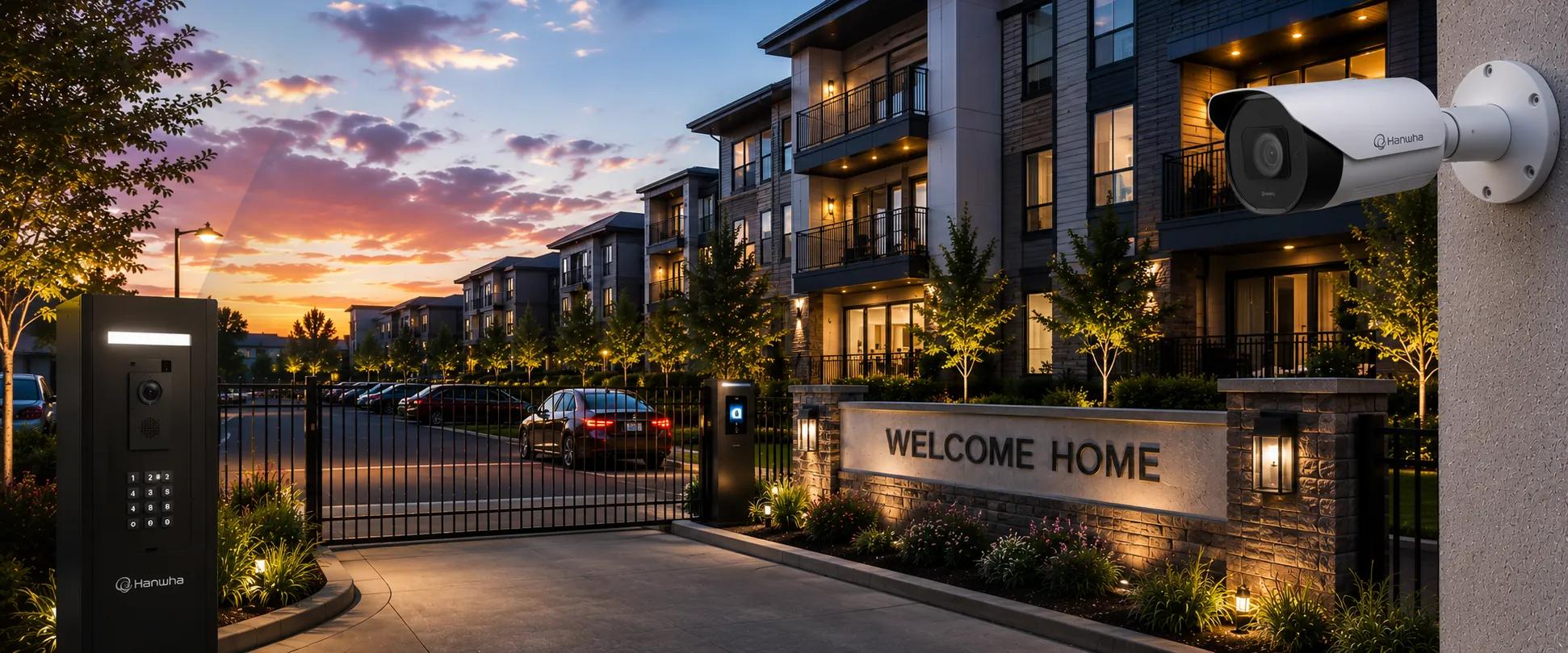
Why Apartment Security Is Different From Commercial Security
Apartment and multi-family security camera systems operate in a unique environment: a mix of public access (parking, lobbies) and private residential space (corridors leading to individual units, pool areas at certain hours). The system must deter crime and provide forensic evidence while respecting tenant privacy rights and complying with Florida landlord-tenant law.
The result is a coverage model that focuses entirely on common areas and access points — never inside units, and with care in areas like laundry rooms and fitness centers where tenants have some privacy expectation even in a shared space.
The Six Key Coverage Areas in Florida Apartment Buildings
1. Building Entrances and Lobbies
The primary entry points — lobby doors, main entrance gates, package delivery areas — are the highest-priority coverage zones. Install cameras at face height (1.8–2.2m) facing inward to capture clear images of everyone entering. For buildings with video intercom at the entrance, the intercom camera supplements but does not replace a dedicated NVR-connected camera that archives footage.
2. Parking Areas and Garages
Vehicle break-ins are the most common crime reported at Florida apartment complexes, particularly in Miami-Dade, Broward, and Palm Beach counties. Parking coverage is non-optional from both a safety and insurance liability perspective. Cover all entry/exit points with LPR-capable cameras and provide general area coverage with 4MP cameras on light poles or building walls. Parking garage coverage should include every level and all stairwell/elevator vestibule areas.
3. Elevator Cabs
One fisheye or wide-angle IP camera per elevator cab provides complete interior coverage in a single unit. Use cameras rated for the vibration environment of elevator operation — standard mounting on the ceiling of the cab.
4. Stairwells and Corridors
External stairwells, hallways, and corridors leading to units are common locations for package theft, loitering, and assault incidents. Cover each floor corridor with a wide-angle dome camera providing coverage of the full hallway length. Use IR cameras in stairwells where lighting is typically poor. Note: corridor cameras should be positioned to see the hallway, not to see inside unit doorways when doors are open — this is the privacy line.
5. Pool and Amenity Areas
Florida pools, fitness centers, clubhouses, and tennis courts are major liability exposure points. Pool cameras must cover the full water surface (required by many Florida property insurance policies), pool deck, and gate access. Ensure cameras meet Florida's angle-of-view requirements for pool monitoring under the property insurance policy — some policies specify minimum coverage percentages.
6. Laundry Rooms and Mail Areas
Package theft and laundry theft are frequent tenant complaints. Cover laundry rooms with a single wide-angle camera covering the full room (positioned to see machines and the entry, not individual people in private moments). Package areas should have dedicated coverage given the surge in porch piracy affecting Florida apartment residents.
Recommended System Design for a 24-Unit Florida Apartment Building
- 2 × lobby/entrance cameras (face height + wide angle)
- 4 × parking area cameras (poles or building-mounted)
- 1 × LPR camera at vehicle entrance
- 2 × elevator cameras (if 2 elevators)
- 4 × corridor cameras (one per floor in 4-story building)
- 2 × stairwell cameras (interior and exterior stairs)
- 2 × pool/amenity area cameras
- 1 × laundry/package room camera
- Total: 18 cameras
- NVR: 32-channel with H.265+ and 30-day retention (~8 TB storage)
Florida Legal Compliance for Apartment CCTV
Florida landlords are not required by state statute to post surveillance signage for common area cameras, but it is strongly recommended as both a deterrent and a defense against tenant privacy claims. Standard practice: post "Video Surveillance in Use" notices at all building entrances and elevator lobbies. Include notification of surveillance in the lease agreement.
Never install cameras inside individual units, inside restrooms, or in any area where tenants have a reasonable expectation of complete privacy. If a tenant requests footage related to an incident on their lease unit floor, consult with your property attorney about disclosure obligations under Florida law.
Remote Management for Florida Property Managers
Property management companies with multiple Florida apartment buildings benefit significantly from centralized CCTV management. 's Hik-Central platform manages cameras across all properties from a single interface — incident investigation, live monitoring, and system health checks without traveling to each site.
IDS CCTV works with Florida property management companies and HOAs to design and supply apartment security camera systems. Free system layout for your floor plan, wholesale pricing, and statewide UPS shipping. Call (954) 903-0007.